
Concrete Pool Decks in Conway SC: Design Ideas & Costs
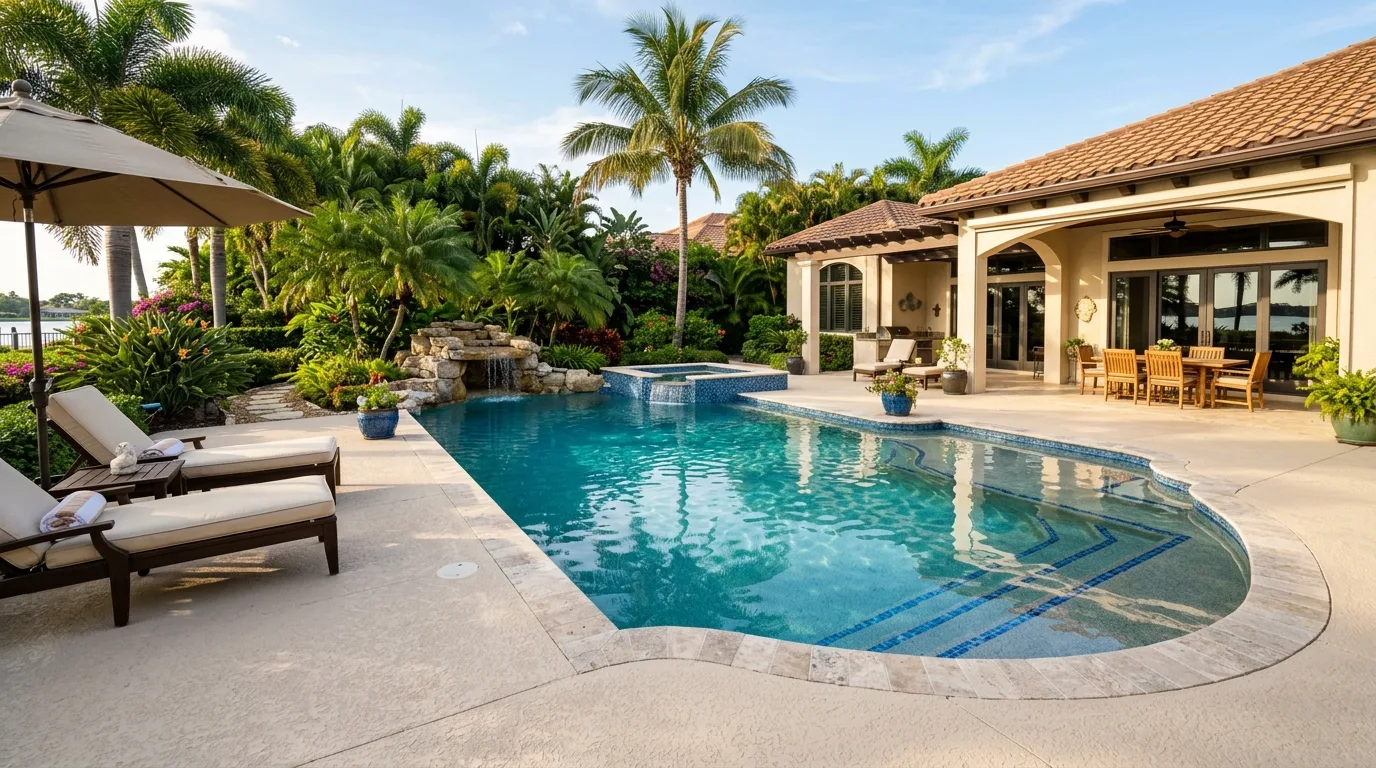
South Carolina’s long warm season — swimming weather runs from late April through October in Conway — makes pool decks one of the most-used outdoor surfaces on the property. A good pool deck looks great, stays safe underfoot when wet, and holds up through years of sun, water, and foot traffic. A bad one blisters your bare feet in July, becomes a slip hazard after splashing, and cracks within five years from inadequate base prep. This guide covers concrete pool deck options for Conway homeowners, including design and finish choices, cost expectations in the Horry County market, and what local conditions mean for pool deck installation and longevity. We cover surface options, installation process, cost factors, and maintenance requirements specific to Conway’s climate.
Conway Pool Deck Estimate
Conway Concrete Pros specializes in pool deck installation and resurfacing throughout Horry County. Free estimates.
Why Pool Decks in Conway Need Specific Design Attention
Conway’s humid subtropical climate creates three specific challenges for pool decks that distinguish this market from cooler or drier regions. First, surface temperature: concrete pool decks in Conway’s summer sun can reach 130–150°F surface temperature by mid-afternoon — hot enough to cause burns on bare feet. Surface selection and color choice dramatically affect this. Second, moisture cycling: Horry County’s seasonal rainfall and high humidity mean pool deck surfaces are wet much of the year, creating slip hazards if the surface texture isn’t appropriate. Third, UV exposure: sealers and decorative finishes degrade faster in South Carolina’s sun than in northern markets.
These factors together mean that the choice of surface finish for a Conway pool deck isn’t just aesthetic — it’s a safety and durability decision. Light-colored, textured surfaces perform significantly better than dark, smooth finishes for all three of these criteria.
Types / Options: Concrete Pool Deck Surfaces
Broom-finished or textured concrete is the most common and cost-effective pool deck surface. The broom texture provides natural slip resistance and, in light colors, reflects enough heat to remain barefoot-comfortable in summer. Standard broom finish pool decks run $4–$7 per square foot in Conway. Plain gray concrete is the most affordable but shows staining from pool chemicals over time.
Stamped concrete with anti-slip sealer creates a decorative appearance while maintaining safety. The most popular patterns for Conway pool decks are wood plank (creates a warm, resort aesthetic), travertine (cool gray tones that absorb less heat), and ashlar slate (structured, modern appearance). Stamped pool decks run $8–$14 per square foot. All stamped applications require anti-slip additive in the sealer for pool applications.
Exposed aggregate exposes the natural stone aggregate by washing away the surface layer before full cure. This creates a permanently textured, slip-resistant surface with a natural appearance that doesn’t rely on sealer for traction. Exposed aggregate pool decks run $6–$10 per square foot. They require occasional sealing to prevent aggregate loosening but are among the lowest-maintenance options for Conway’s outdoor environment.
Concrete resurfacing overlay applies a thin decorative layer over an existing pool deck slab, transforming appearance without the cost of full replacement. Resurfacing runs $5–$9 per square foot and is appropriate when the existing slab is structurally sound with adequate drainage. In Red Hill and Carolina Forest where many pool homes are from the 2005–2015 build-out, resurfacing is a cost-effective upgrade option.
Practical Uses
New pool installation: Conway homeowners adding a new inground pool need the deck designed and installed concurrently. A typical 600–800 sq ft pool deck surround in broom-finished concrete with anti-slip sealer runs $2,400–$5,600. Stamped with anti-slip: $4,800–$11,200. Coordinating the pool deck pour with the pool shell installation prevents drainage issues from developing between the pool structure and the deck perimeter.
Pool deck resurfacing in Carolina Forest: Homes in Carolina Forest with 10–15 year old pool decks are prime candidates for resurfacing. Original pool decks from the community’s peak build-out years often show surface scaling and faded color. Resurfacing at $5–$9 per square foot ($3,000–$7,200 for a typical deck) restores the appearance and improves slip resistance without the $8,000–$15,000 cost of full replacement.
Pool deck expansion: Many Conway homeowners expand existing pool decks to add lounge areas, outdoor kitchen space, or shade structure pads. Matching existing pool deck concrete exactly is difficult due to weathering differences — stamped overlays applied to both old and new sections create a unified appearance. Budget $8–$14 per square foot for matched stamped overlay application across old and new sections.
Anti-slip treatment on existing deck: If the primary concern is a slippery surface rather than appearance, anti-slip sealer can be applied to an existing clean, prepared deck without resurfacing. Cost: $150–$400 for a standard pool deck surround. This is the most economical safety improvement for Conway pool owners with recently sealed decks that have become slippery.
Pool deck drainage improvement: Standing water on pool decks accelerates concrete degradation and creates slip hazards. Pool decks with inadequate drainage slope (less than 1/4” per foot away from the pool edge) benefit from channel drain installation at the outer perimeter of the deck. Channel drain installation during resurfacing: $600–$1,200 for a standard pool surround. This is especially valuable for Conway properties that receive heavy summer rainfall.
Conway Pool Deck Installation & Resurfacing
Get a free pool deck estimate for your Conway or Horry County home.
How Pool Deck Concrete Is Installed in Conway
Pool deck installation requires coordination with the pool shell — typically poured in sections around the pool perimeter after the shell is installed and backfilled. We establish drainage slope away from the pool edge and toward the yard perimeter, set expansion joints between the deck sections and the pool coping, and use a concrete mix appropriate for constant moisture exposure (low water-cement ratio for durability, light pigment for heat management).
In Horry County’s clay soils, base preparation beneath pool decks is especially important. Pool excavation disturbs significant soil volume, and the backfill around the pool shell settles actively for years after installation. Pool decks poured before this settlement stabilizes often show cracking at the pool coping joint and near the pool corners — the areas where soil disturbance was greatest. We recommend waiting at least 90 days after pool shell backfill completion before pouring the deck, and we specify expansion joints at the pool coping connection to allow for independent movement.
Frequently Asked Questions
How long does a concrete pool deck last in Conway SC?
A properly installed and maintained concrete pool deck in Conway lasts 15–25 years. The humid subtropical climate and pool chemical exposure create more wear than in inland markets, but proper sealing and prompt crack repair extend this significantly. Pool decks on Horry County’s clay soils with inadequate base preparation typically show significant cracking within 8–12 years. The quality of base prep and the drainage design are the most important longevity factors.
Is concrete or pavers better for a pool deck in Conway?
Concrete is generally the better choice for Conway pool decks. The monolithic concrete surface eliminates the joint displacement that makes paver pool decks a trip hazard over time — particularly important in an area where wet feet and sandy surfaces are the norm. Concrete also provides a more consistent slip-resistant surface. Pavers may require more frequent re-leveling on Horry County’s clay soils, and the joint sand can harbor algae in Conway’s humid climate. See our concrete vs paver comparison for the full analysis.
How do I keep a concrete pool deck from being too hot in Conway’s summers?
Surface color is the most effective management tool. Light gray, tan, and off-white concrete surfaces are 30–40% cooler than dark-colored surfaces in direct sun. Light stamped finishes with travertine or natural stone colorways are specifically popular in Horry County for this reason. Exposed aggregate with light-colored stone aggregate also helps. Anti-slip sealers with UV-reflective properties provide some additional heat reduction versus standard film-forming sealers.
Related: