
Stamped Concrete Patios in Conway SC: Design Ideas & Costs
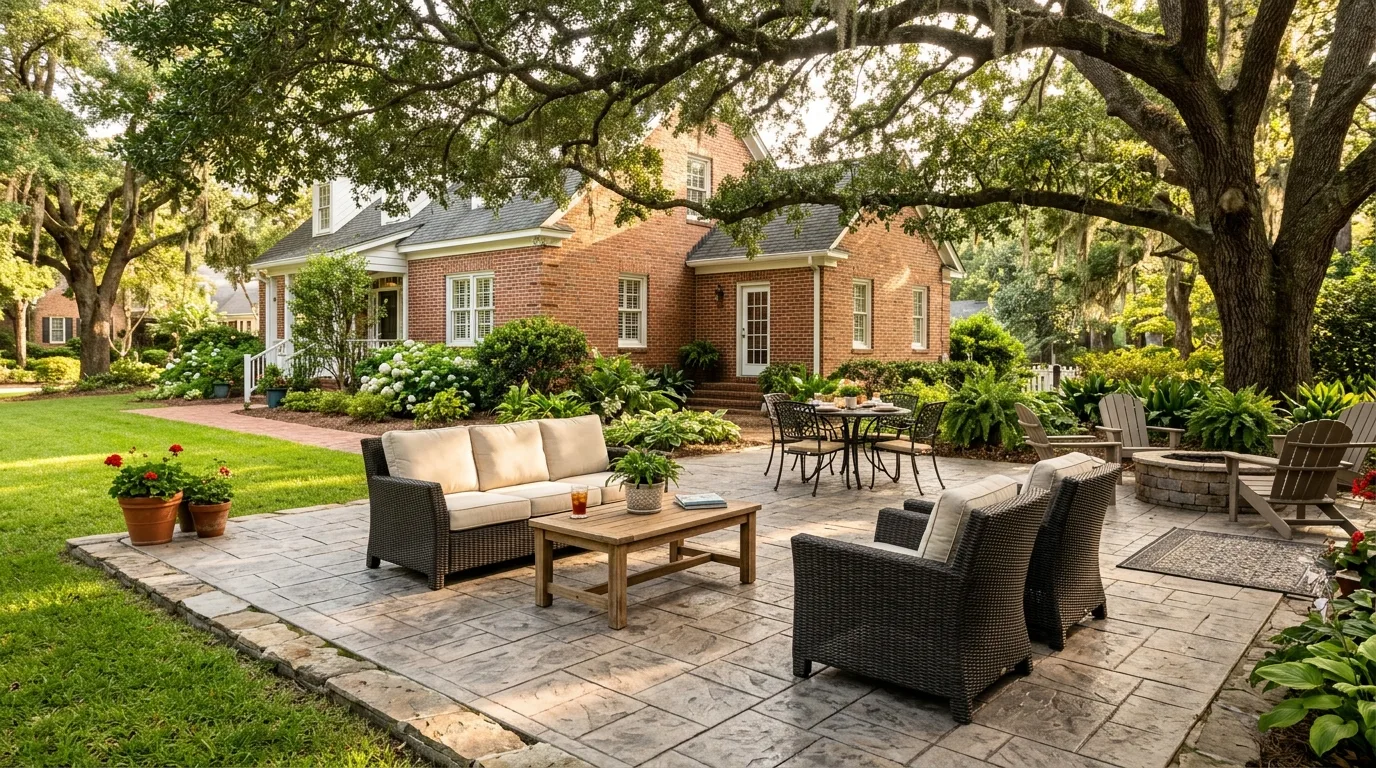
Stamped concrete is the most popular outdoor patio upgrade among Conway homeowners who want the appearance of natural stone or brick at a fraction of the cost. When done well, a stamped concrete patio transforms an ordinary backyard into an outdoor living room — and in South Carolina’s temperate climate, that outdoor space gets used nine or ten months of the year. This guide covers the most popular patterns and colors for Conway properties, realistic cost expectations in the Myrtle Beach-Conway market, and what the local climate means for stamped concrete performance and maintenance. We cover design options, installation process, cost factors, and long-term care specific to Horry County conditions.
Design Your Conway Stamped Concrete Patio
Free estimates for stamped and decorative concrete patios throughout Horry County.
Why Stamped Concrete Works Well in Conway
Stamped concrete is essentially a decorative finish applied to a standard concrete slab. The structural base is the same as any concrete pour — properly prepared sub-base, reinforcement, control joints, and drainage slope. The decorative work happens on pour day: color hardener or integral pigment is applied to the fresh surface, a release agent prevents the stamp mats from sticking, and the mats are pressed into the concrete to create the pattern texture and joint lines that mimic natural materials.
Conway’s climate is generally favorable for stamped concrete when the installation is done correctly. The challenge is sealer maintenance: UV exposure from South Carolina’s long, sunny summers breaks down decorative sealers faster than in northern climates. A stamped concrete patio in Conway that’s properly sealed on a 2-year schedule holds its color and luster reliably. One that goes 4–5 years without resealing will show fading and may develop surface scaling that requires restoration work.
The positive side of Conway’s climate for stamped concrete is the expanded outdoor use season. A stamped patio in Horry County gets used from March through November — much longer than patios in northern markets. That extended use adds to the ROI of the upgrade and justifies the additional investment over plain concrete.
Types / Options: Patterns and Colors for Conway Homes
Ashlar slate pattern is the most popular choice in Conway, replicating the look of large cut slate tiles in a rectangular grid layout. It suits both traditional and contemporary home styles and is available in earth tones that complement South Carolina’s natural palette — warm grays, sandstone, and terracotta. Cost: $10–$15 per square foot installed.
Random stone (flagstone) pattern creates an irregular natural-stone appearance with varied stone sizes and organic joint lines. This is the top choice for properties near the Waccamaw River and for homes in the Downtown Historic District where a more rustic, natural appearance fits the aesthetic. Cost: $10–$16 per square foot installed.
Brick or running bond pattern replicates traditional brick pavement, which fits particularly well with brick-exterior homes common in Horry County subdivisions. Aged brick colorways — reds, buffs, and charcoals — are the most requested for this pattern. Cost: $9–$14 per square foot installed.
Wood plank pattern creates the appearance of hardwood decking in concrete — popular for pool surrounds and covered porch extensions. The wood grain texture adds visual warmth while delivering concrete’s durability and moisture resistance. Cost: $11–$17 per square foot installed.
Custom multi-color designs combine multiple stamp patterns and colors — perhaps a central medallion in one pattern surrounded by a border in another. These showcase designs add significant visual impact and cost, ranging $15–$21 per square foot depending on complexity.
Practical Uses
Backyard entertaining patio: A 400 sq ft stamped patio in ashlar slate with a warm gray color runs approximately $4,000–$6,000 installed in the Conway area. This is the single most popular stamped concrete project in Horry County — large enough to accommodate outdoor furniture and a grill area, with enough visual impact to justify the upgrade over plain concrete.
Pool surround expansion: Stamped concrete pool decks in a wood plank or travertine pattern run $6–$12 per square foot for pool deck applications. The non-slip texture of most stamp patterns makes them appropriate for pool surrounds, and the decorative finish creates a resort-style aesthetic popular in Carolina Forest homes with private pools.
Front entry walkway: A decorative walkway from the driveway to the front door in a contrasting pattern from the patio creates a cohesive outdoor design language. Front walk projects run 150–250 sq ft typically, with stamped concrete costing $1,500–$4,000 depending on width, pattern, and color complexity.
Covered porch slab: Many Conway homes have covered porches that were poured in plain concrete years ago. Resurfacing with a stamped overlay — a thin decorative layer bonded to the existing slab — costs $5–$9 per square foot and transforms the appearance without the cost of replacement. This is a popular upgrade among homeowners in the Riverfront neighborhood who are updating older home exteriors.
Outdoor kitchen base: A stamped concrete slab beneath an outdoor kitchen structure provides a finished surface that’s easy to clean and coordinates with the patio. Budget 150–250 sq ft for a typical outdoor kitchen slab at $10–$15 per square foot stamped.
Conway's Stamped Concrete Specialists
Get a design consultation and free estimate for your Conway stamped concrete project.
How Stamped Concrete is Installed in Conway
The installation process for stamped concrete in Conway follows standard concrete work with decorative additions. We prepare the site, set forms, and compact the sub-base to handle Horry County’s clay soil conditions. On pour day, the concrete is placed and screeded level, then color hardener is broadcast across the surface and worked in. A release agent — typically a powder in a contrasting color that adds depth to the finished pattern — is applied before stamping.
Stamping proceeds quickly: the mats are pressed into the concrete in sequence, with the finishers working against the concrete’s setting time. In Conway’s summer heat, setting time is significantly shorter than in fall or winter pours — this is the primary reason we recommend scheduling decorative concrete work in fall when possible. Detail work at borders and edges requires careful hand-tool work after the primary stamping is complete.
After the pour, the concrete cures for 24–48 hours before the release agent is washed off, revealing the final color contrast. A penetrating or film-forming sealer is applied at this point to protect the surface and enhance color. This sealer is what protects Conway patios from UV degradation — and it’s what needs to be reapplied every 2–3 years to maintain the patio’s appearance.
Frequently Asked Questions
How long does a stamped concrete patio last in Conway SC?
A properly installed and maintained stamped concrete patio in Conway lasts 20–30 years or more. The critical maintenance requirement is resealing every 2–3 years to protect against South Carolina’s UV exposure and moisture. Patios that go without resealing for extended periods develop faded color and may develop surface scaling that requires resurfacing. With regular maintenance, stamped concrete patios in Horry County routinely perform well for decades.
Can stamped concrete be slippery when wet?
Most stamped concrete patterns have a textured surface that provides adequate traction when dry. When wet, smooth release-agent finishes can be slippery — this is why pool surround applications specifically use anti-slip additive in the sealer or select patterns with higher surface relief. For any pool deck or exterior stair application, we specify anti-slip sealer additive as standard practice. Regular walkways and patios with standard patterns are generally safe in wet conditions.
How often does stamped concrete need resealing in South Carolina?
Conway’s climate requires resealing every 2–3 years for stamped concrete patios that receive regular sun exposure. The combination of UV radiation and South Carolina’s humidity breaks down standard sealers faster than in northern climates. Signs that resealing is needed include: loss of sheen, water no longer beads on the surface, and fading color. Catching the resealing window before these signs appear is less expensive than resurfacing after significant degradation. Learn more about concrete patio care in our services section.
Related: