
Best Time for Concrete Work in Conway SC: Seasonal Guide
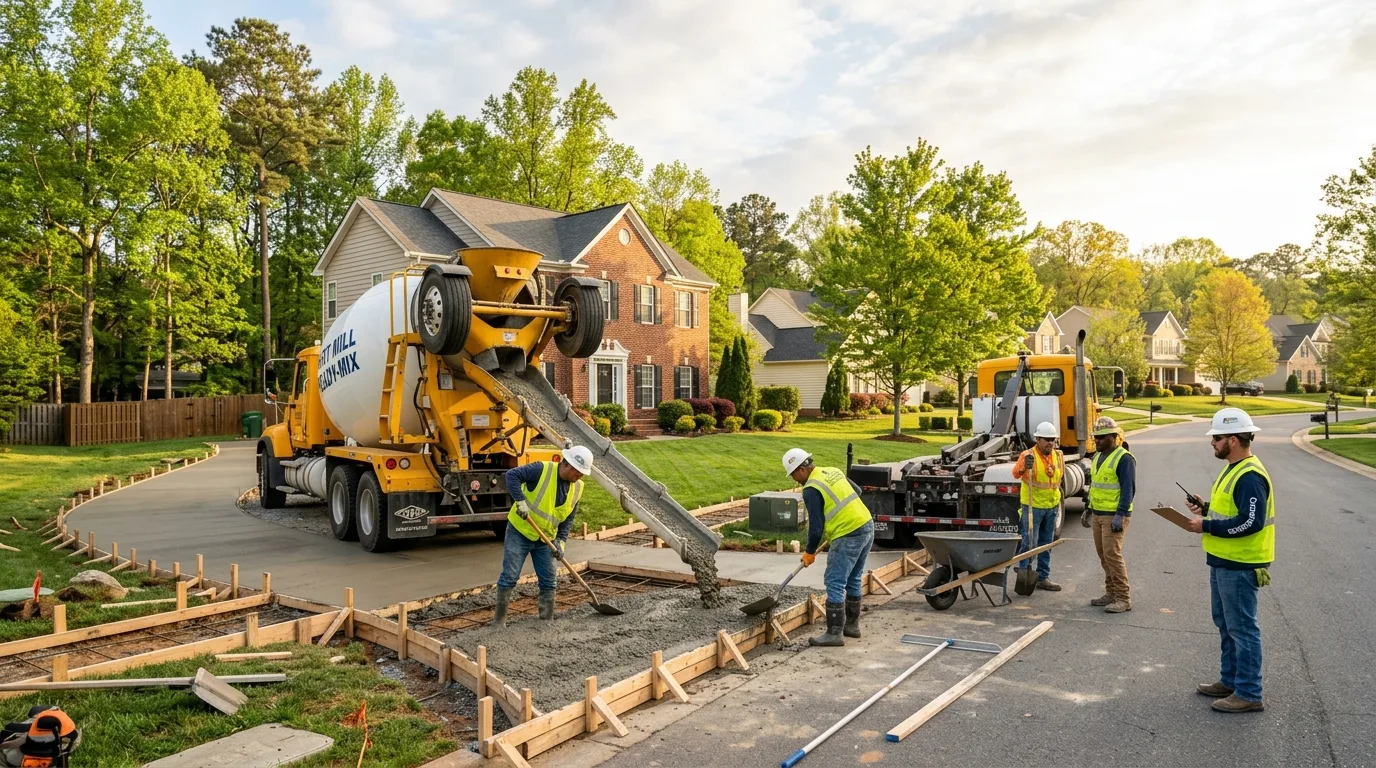
Timing a concrete project in Conway, SC isn’t just about contractor availability — it’s about giving your concrete the best possible conditions to cure properly and deliver a surface that lasts for decades. South Carolina’s humid subtropical climate creates very different working conditions in July versus November, and the difference shows in the finished product. In this post, we cover the best and worst seasons for concrete in Conway, what to watch for in each, and how to beat the summer rush to get better pricing and faster scheduling.
Schedule Your Conway Concrete Project
Fall and spring slots fill up fast. Contact Conway Concrete Pros to reserve your project date.
Why Timing Matters for Concrete in Conway
Concrete cures through a chemical process called hydration — water reacts with cement to form crystals that give concrete its strength. This process is sensitive to temperature and moisture. Too hot and too dry: the concrete loses water too quickly, weakening the surface and causing plastic shrinkage cracks. Too cold: the hydration process slows or stops, leaving concrete with reduced strength if it freezes before gaining adequate strength. The ideal window is moderate temperatures with low-to-moderate humidity.
Conway’s climate — humid subtropical (Cfa) — creates extremes on both ends. Summers are hot and humid with frequent rain, which creates a challenging environment for concrete finishing and curing. Winters are mild, which is actually an asset in Conway’s market compared to northern states. Understanding which months fall into the ideal range is the key to scheduling smart in Horry County.
Seasons for Concrete Work in Conway
Fall (October–November): Best Season
Fall is the prime season for concrete work in Conway, and experienced contractors will tell you their best results come from October and November pours. Daytime temperatures average 65–75°F with comfortable humidity, which creates ideal curing conditions. Concrete retains moisture longer, giving the cement crystals more time to develop fully. The result is a harder, more durable surface.
Fall also brings competitive pricing and better contractor availability. The summer surge subsides after Labor Day, and most contractors have openings by mid-October. Conway homeowners who schedule fall projects often find 10–15% better pricing compared to peak summer demand. For stamped concrete patios and decorative driveways, fall is particularly valuable — finishers have more working time before the concrete sets, allowing for more careful pattern placement and detailing.
Winter (December–February): Good Season
Conway’s mild winters are an underappreciated advantage for concrete scheduling. Average January daytime temperatures reach 57°F, rarely dipping below 35°F at night — well above the threshold where concrete curing is compromised. Properly managed winter pours in South Carolina produce excellent results and often the best pricing of the year.
The main risks in winter are overnight temperature drops in January and February (lows average 34°F) and the possibility of cold fronts that push temperatures briefly below freezing. Reputable contractors monitor forecasts and avoid scheduling pours when overnight temperatures are projected below 35°F. If pours happen on marginal days, insulating blankets can protect fresh concrete from cold shock. Winter demand is lowest, meaning the fastest scheduling and most competitive pricing for Conway homeowners.
Spring (March–May): Good Season
Spring brings rising temperatures and moderate humidity — generally good conditions for concrete. March and April are particularly favorable, with temperatures in the 60–75°F range. The risk in spring is weather unpredictability: March can bring late cold fronts, and May can deliver early heat waves that push conditions toward the summer challenge zone.
Spring is a popular scheduling window in Conway because homeowners want to have outdoor spaces ready before summer. This popularity means spring books faster than fall — homeowners planning spring projects should contact contractors in January or February. May in particular can see contractor backlogs as summer demand builds.
Summer (June–September): Challenging Season
Summer is the most challenging season for concrete work in Conway, for several reasons. Average July highs reach 91°F with high humidity, which accelerates concrete setting time significantly. Finishers have a narrower window to complete decorative work before the surface becomes unworkable. Rapid moisture loss causes plastic shrinkage cracks in the surface layer if curing isn’t carefully managed with shade, spray misting, and curing compounds.
Summer also coincides with hurricane season (June–November, peak August–October), which can delay projects for days when tropical systems bring extended rain. Demand is highest in summer, meaning longer wait times and higher prices across the Conway and Myrtle Beach market.
Summer work is possible — contractors pour concrete in South Carolina summers routinely. Early morning pours, shade structures, and aggressive curing protocols manage the heat risks. But for projects where quality is the priority — especially decorative work — waiting until fall yields better results.
Get on the Conway Fall Concrete Schedule
Fall slots fill up by September. Contact us now to reserve your project date and beat the rush.
Practical Uses
Concrete driveway replacement: Best scheduled October–November for most Conway properties. The combination of ideal curing conditions, competitive pricing, and contractor availability makes fall the clear choice. New driveway installations in Red Hill and Carolina Forest benefit especially from fall scheduling before the ground becomes saturated in winter.
Stamped concrete patios: Schedule in October or early November for decorative work. The additional working time before set allows finishers to execute complex patterns carefully. Homeowners in the Downtown Historic District area who want detailed decorative work consistently get better results from fall pours.
Concrete slab and garage floor: Winter is an excellent choice for interior garage floors and covered slabs. Protected from temperature extremes, these pours often achieve excellent results in December–February at the year’s best pricing.
Foundation repair work: October through February is ideal for foundation crack repair and drainage correction. Lower soil moisture during this period stabilizes conditions near the foundation and gives drainage repairs the best chance to be properly evaluated before the next wet season.
Commercial concrete projects: Spring (March–April) is often best for commercial projects that need to be completed before summer business activity picks up. Fall is the second choice for projects that can wait.
Frequently Asked Questions
Can concrete be poured in winter in South Carolina?
Yes — Conway’s mild winters make winter pouring feasible most of the time. The primary concern is overnight temperatures below 35°F, which can compromise fresh concrete if it’s not protected with insulating blankets. Most Conway winters have only a handful of nights in this range, and reputable contractors monitor forecasts and plan pours accordingly. Winter is actually a great season for concrete in Conway’s climate.
Does rain affect concrete work in Conway?
Rain on fresh concrete is a problem — it dilutes the surface, weakens the cement paste, and causes surface defects. Contractors shouldn’t pour when rain is imminent and typically use 7-day forecasts to schedule pours on dry windows. Conway’s wettest months (July–September) create the most scheduling uncertainty due to afternoon thunderstorms. Fall and winter have more reliable dry stretches for project scheduling.
How far in advance should I book a Conway concrete contractor?
For fall projects, book in August or September. For spring projects, book in January. Summer projects can sometimes be booked on shorter notice due to cancellations, but planning ahead avoids the common frustration of contractor unavailability. The Conway and Myrtle Beach corridor’s active construction market means good contractors book weeks out during peak season.
Related: