
Concrete Patio vs Paver Patio: Conway Homeowner's Guide
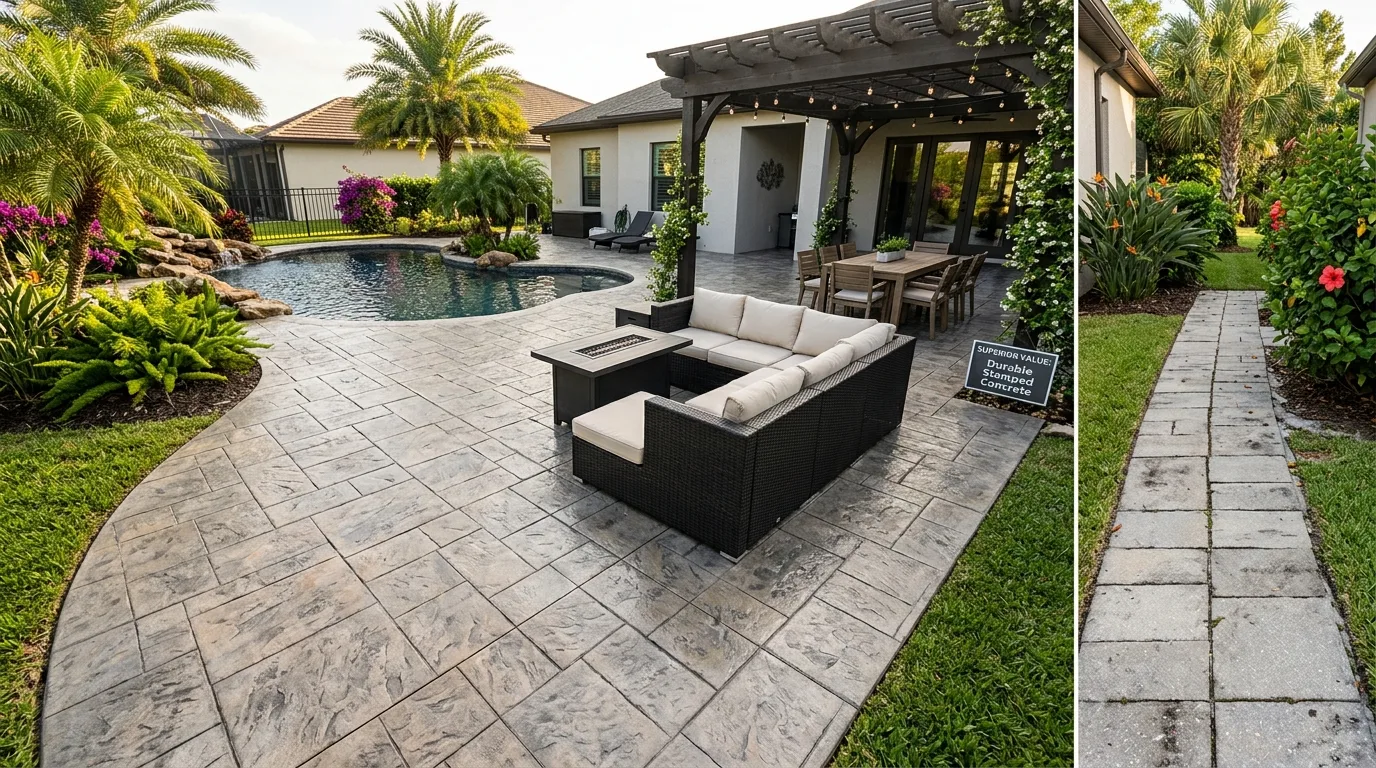
If you’re planning an outdoor patio in Conway, SC, the concrete vs. pavers debate comes up in almost every project conversation. Both materials work well in South Carolina’s climate, but they perform differently on Horry County’s clay soils, they cost differently, and they age differently. This guide gives Conway homeowners a clear-eyed comparison so you can make the choice that fits your priorities — not just the one your contractor is most comfortable installing. We cover initial cost, long-term durability, maintenance requirements, and how each material handles the local soil and weather conditions.
Discuss Your Conway Patio Options
Conway Concrete Pros installs both concrete and helps you choose the right surface for your property. Free estimates.
Why the Conway Climate Matters for This Decision
Horry County’s environment sets up this comparison differently than it would in a dry climate. Conway receives 52 inches of annual rainfall, clay soils move seasonally with moisture changes, and summer UV exposure is intense. These factors affect both materials — but they affect them differently. Understanding the local context before comparing costs or aesthetics gives you a more honest picture of what you’re actually choosing between.
Clay soil movement is the most important local factor. Both concrete and pavers are affected by shifting soil, but concrete is affected differently than pavers. A concrete slab that settles unevenly across its surface can crack and create trip hazards. Pavers that settle can be individually re-leveled — but widespread settling in a paver installation means re-excavating and re-leveling entire sections. In Carolina Forest and Red Hill, where soil settlement is more common due to newer fill material, this difference in repair approach matters significantly.
Types / Options
Poured concrete slab is the most common choice for Conway patios. It’s installed as a single monolithic pour with control joints, sealed to protect against UV and moisture, and can be left plain or upgraded with stamping, color, or texture. On stable soil with proper drainage, a concrete slab is the most durable and maintenance-light option available.
Stamped concrete adds decorative patterns and color to a poured slab, creating the appearance of stone, brick, or tile at lower cost than the natural materials. Stamped concrete patios in Conway run $8–$18 per square foot installed. They require resealing every 2–3 years to maintain color vibrancy and surface protection in South Carolina’s UV environment.
Interlocking concrete pavers are manufactured concrete units installed on a compacted sand base. They offer a modular appearance with easy repair access — individual pavers can be lifted and replaced if damaged. Installed cost in the Conway area runs $12–$20 per square foot. On Horry County’s clay soils, the sand base can shift with moisture changes more than a solid concrete sub-base, requiring periodic re-leveling.
Natural stone pavers (slate, bluestone, travertine) are premium options that add significant cost — typically $20–$35 per square foot installed. Their performance in Conway’s humid climate is generally good, but some stone types absorb moisture and can stain or crack. Travertine in particular requires sealing to prevent moisture absorption in South Carolina’s wet seasons.
Practical Uses
Low-maintenance entertaining space: A plain or stamped concrete patio is the lowest-maintenance choice for Conway homeowners who want a functional outdoor area without annual upkeep requirements. Once sealed, concrete requires only occasional cleaning and resealing every 2–3 years.
Repair-accessible installation near trees: Pavers make more sense in areas where tree roots are present or likely to cause future disruption. Individual paver sections can be lifted without replacing the entire installation. Homeowners in the Downtown Historic District with mature oak canopies often choose pavers for this reason.
High-end decorative outdoor kitchen area: Stamped concrete is the most cost-effective way to achieve the appearance of stone or tile for an outdoor kitchen base in Conway. It provides a seamless surface for appliance placement and is easier to seal around complex perimeter edges than pavers.
Pool deck extension: Concrete is almost always the better choice for pool deck areas because the seamless surface prevents joint displacement that could become a trip hazard. Conway Concrete Pros installs non-slip textured concrete specifically for pool surrounds — see our pool deck guide for more detail.
DIY-accessible future modifications: If there’s any chance you’ll want to modify the patio footprint in the future — adding a fire pit area, extending toward a new structure — pavers allow section-by-section extension without visible seams. Concrete extensions always show a cold joint where the old and new pours meet.
Get a Conway Patio Comparison Quote
We'll quote both concrete and paver options for your Conway property so you can compare apples to apples.
How It Works: Cost and Long-Term Value
For a 300-square-foot patio in Conway, the installed cost comparison looks like this: plain concrete, $900–$1,800; stamped concrete, $2,400–$5,400; basic interlocking pavers, $3,600–$6,000; premium natural stone, $6,000–$10,500. These figures reflect the Myrtle Beach-Conway market with concrete material at $200–$238 per cubic yard.
Long-term maintenance cost shifts the comparison over time. Concrete requires resealing every 2–3 years at $150–$400 per application for a 300 sq ft patio. Pavers require periodic joint sand re-filling, potential re-leveling on clay soils, and sealing if using stone. Over a 15-year period, a concrete patio’s total cost of ownership is typically lower than pavers when accounting for Horry County’s soil movement patterns.
Frequently Asked Questions
Which lasts longer in Conway’s climate — concrete or pavers?
A properly installed concrete slab outlasts a paver installation on Horry County’s clay soils in most cases. The monolithic concrete surface resists differential settlement better than the individual paver units, which can shift on the sand base as clay soils move seasonally. Concrete slabs properly installed with drainage slope and a compacted gravel base have lifespans of 25–35 years in Conway. Paver installations on clay soils often require re-leveling every 8–12 years.
Can I add a concrete patio to an existing one?
Yes, but new concrete poured against existing concrete will show a cold joint — a visible seam where the two pours meet. This is normal and can be minimized with proper edge preparation. The cold joint doesn’t affect structural performance. If visual seamlessness is important, a full resurfacing overlay of both old and new areas can create a unified appearance. Contact us to discuss options for your specific Conway patio project.
What’s the minimum slope for a patio in Conway?
A minimum 2% slope (1/4 inch per foot) away from the home is the standard recommendation for all concrete patios in Conway. Given Horry County’s 52+ inches of annual rainfall, proper drainage slope is not optional — it prevents water pooling that accelerates concrete surface wear and creates moisture problems near the foundation. Our estimates always specify the drainage slope for your specific site. Learn more in our concrete patio installation guide.
Related: