
New Construction Concrete in Conway SC's Growing Neighborhoods
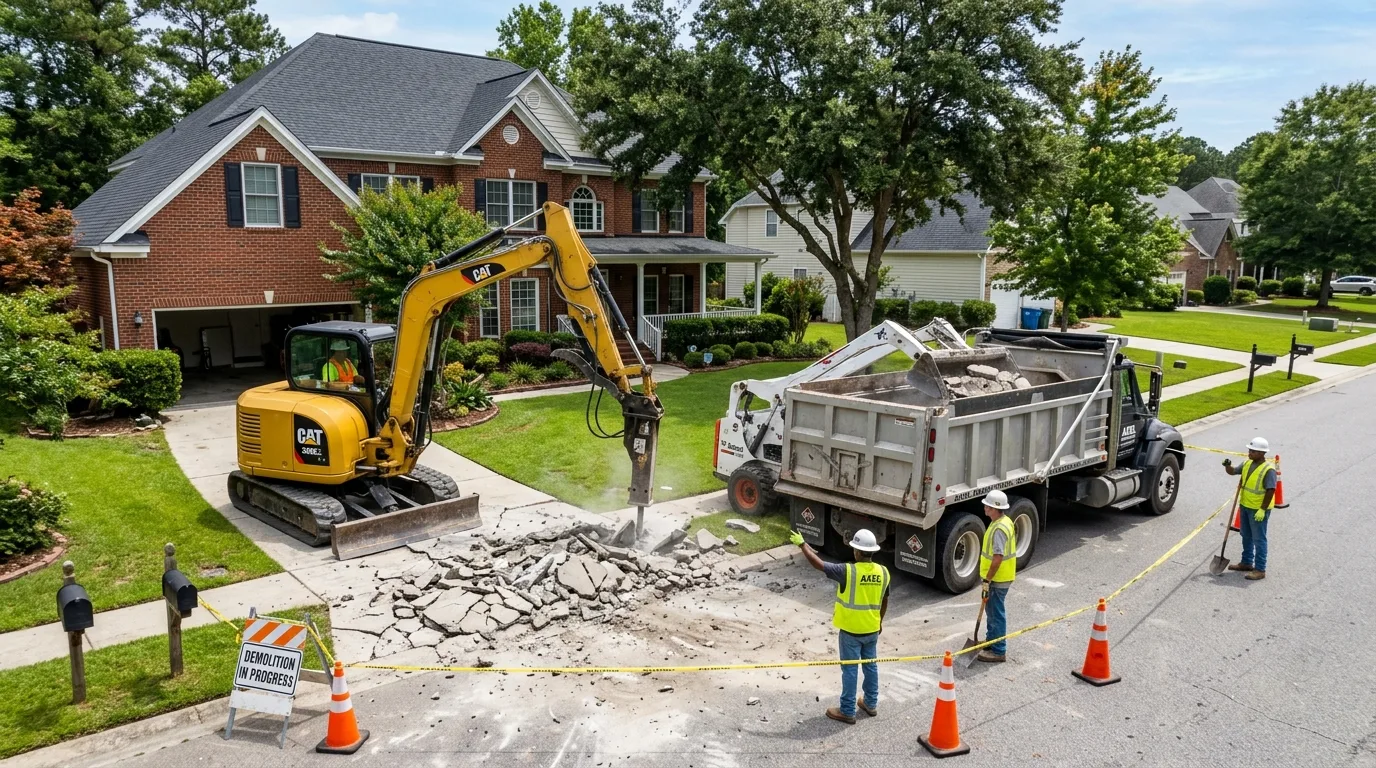
Conway, SC is growing rapidly — Red Hill, Carolina Forest, and the corridors along US 501 between Conway and Myrtle Beach are among the fastest-developing residential areas in South Carolina. That growth creates constant demand for new construction concrete: driveways, garage slabs, patio pads, foundation work, and commercial flatwork for the retail and service businesses that follow residential growth. This guide addresses what homebuilders, general contractors, and owner-builders need to know about concrete work in Conway’s new construction environment — the specific soil challenges of newly developed lots, permit requirements, and the concrete specifications that set new construction up for long-term success. We cover lot preparation, concrete specifications for new construction, and the most common new construction concrete projects in the area.
New Construction Concrete in Conway
Conway Concrete Pros works with builders and homeowners throughout Horry County on new construction concrete.
Why New Construction Concrete in Conway Requires Special Attention
New construction concrete is different from replacement work on established lots in one critical way: the soil condition. Newly developed lots in Red Hill, the expanding areas of Carolina Forest, and the growing subdivisions along SC-905 have been graded, filled, and compacted — but not over the decades of consolidation that gives established neighborhoods more predictable soil behavior.
Fill soil placed during lot grading consolidates over time as gravity and moisture compress the material. In Horry County’s rainy climate, this process is active throughout the year. The first 5–15 years after grading are when fill soil settles most significantly. Concrete poured on this newly graded ground is going to experience more movement than concrete poured on soil that’s been in place for 50 years — unless the base preparation accounts for this by removing unstable material and replacing it with properly compacted engineered fill.
This is why new construction driveways in newly developed Horry County subdivisions often show more cracking in their first decade than replacement work in established Conway neighborhoods. The concrete isn’t inferior; the soil preparation is the variable.
Types / Options: New Construction Concrete Projects
Residential driveway (new construction): For a new home, the driveway is typically one of the last installations — poured after rough grading and landscaping are established but before final lawn installation. Standard two-car width (16–20 feet wide, 20–30 feet long) in plain 4,000 PSI concrete with wire mesh reinforcement, control joints, and a compacted 4–6 inch gravel base: $2,000–$4,500 in the Conway market.
Garage floor (new construction): Garage floors are typically poured after the structure is framed but before finishing work. Standard residential garage floor: 4-inch concrete on a 4-inch compacted gravel base, with vapor barrier for attached garages. 400–600 sq ft: $1,500–$3,000. Upgrades to 5-inch thickness or epoxy finish are additional.
Concrete patio pad (new construction): Many new home buyers want their patio installed at the same time as the house, before landscaping fills in. A concrete patio pad on a new-construction lot in Carolina Forest or Red Hill benefits from the same compacted base specification as the driveway — don’t assume the graded lot is adequate without adding engineered base material.
Foundation approach slab: The concrete strip from the driveway to the front entrance is often installed as part of new construction concrete. This walk slab connects the driveway to the front door and benefits from the same drainage-slope design applied to the driveway — sloping away from the foundation.
Practical Uses
New construction in Red Hill subdivisions: Red Hill’s +5.78% annual population growth means active new construction on lots graded as recently as 12–18 months before the concrete pour. On these lots, we recommend a minimum 6-inch compacted gravel base beneath driveways rather than the standard 4-inch, and we verify compaction before forming. This additional base work adds $400–$600 to a standard driveway but dramatically reduces settlement cracking risk in the first decade.
Builder-spec construction concrete: Builders working on spec homes in Horry County’s active market sometimes default to minimum-spec concrete work to control costs. Buyers who are inspecting pre-purchase should verify that the driveway and garage floor base preparation was adequate — this isn’t visible after the pour, but it’s the most important quality factor. Ask for documentation of the base material and compaction from the original contractor.
New construction for commercial development near Coastal Carolina University: The CCU area is one of Conway’s most active commercial development zones. New retail and service businesses require commercial-grade concrete — typically 4,500–5,000 PSI, 5–6 inch thickness, with rebar reinforcement — for parking lots and approach slabs. Commercial concrete in this corridor is subject to permit and inspection requirements through the City of Conway Building Department.
Post-construction concrete additions: Homeowners who purchase new construction and want to add patios, extra parking, or workshop slabs within the first few years face the fill-soil consolidation challenge acutely. We recommend waiting at least 18–24 months after the home’s original construction before adding large concrete pads adjacent to the foundation — this allows for initial soil consolidation and gives a clearer picture of how the lot drains.
Retaining walls for sloped new-construction lots: Some Horry County lots require retaining wall systems to manage grade changes. New construction retaining walls over 4 feet require permits and structural engineering review. Block or poured concrete retaining walls installed during new construction are more economical than after-the-fact solutions — coordinate with the builder early if the lot topography suggests a wall will be needed.
New Construction Concrete Quote for Conway
Working on a new home or development in Horry County? Get a detailed concrete estimate from Conway Concrete Pros.
How New Construction Concrete Differs Technically
For new construction on recently graded lots, our specifications differ from replacement work:
Base depth: 6 inches rather than 4 inches of compacted crusher run beneath driveways and large slabs. Control joint spacing: 8–10 feet rather than 10–12 feet to account for more active soil movement. Concrete PSI: 4,000 PSI minimum for residential driveways on new construction lots. Curing: mandatory wet curing or curing compound application, especially critical for summer pours in Conway’s heat.
These specifications add approximately $500–$900 to a standard driveway installation but are the appropriate engineering response to new construction lot conditions in Horry County.
Frequently Asked Questions
When should I schedule concrete on a new construction home in Conway?
Driveways and exterior slabs are best scheduled 30–60 days after rough grading is complete and initial soil compaction has occurred. Pouring too soon after grading — before the soil has had any time to consolidate — increases settlement risk. For lots that were graded during Conway’s wet season, waiting for drier conditions in fall or winter before pouring large slabs is advisable.
Do new construction driveways in Horry County need permits?
Horry County exempts most residential driveways from permit requirements. Garage floors and any concrete work attached to the dwelling typically require permits as part of the overall building permit for the home. Commercial new construction requires permits for all concrete work. For projects coordinated with a general contractor on a new home build, the permits are typically pulled under the overall construction permit.
How long should I wait before driving on new construction concrete?
New concrete driveways require 7 days of curing before passenger vehicle traffic and 28 days before heavy vehicle use. For garage floors, avoid driving on the concrete for 7 days. Avoid sharp turning maneuvers for the first 30 days — the abrasion resistance of the surface continues to improve through the 28-day full cure period. See our driveway installation page for complete new installation guidelines.
Related: