
Concrete Repair vs Replacement in Conway SC: When to Fix, When to Replace
Every Conway homeowner with aging concrete eventually faces the same question: do I repair what I have, or does it make more sense to start over? There’s no single right answer — it depends on the type of damage, the underlying cause, the age and condition of the existing concrete, and whether repair will genuinely solve the problem or just postpone replacement. This guide gives you a clear framework for making this decision for driveways, patios, and slabs in Horry County’s specific conditions. We cover how to evaluate damage type, the repair options available in Conway, and when the math of replacement becomes more favorable than ongoing repair.
Free Repair vs Replacement Assessment in Conway
Conway Concrete Pros gives you an honest evaluation — we never recommend replacement when repair will genuinely work.
Why This Decision Is Different in Conway
The repair vs replacement decision for Conway homeowners has a local dimension that national guides miss: Horry County’s clay soils. Concrete that was installed without proper base preparation — common in the area’s rapid residential development of the 1990s–2010s — will continue to move and crack even after surface repairs unless the underlying drainage and sub-base issues are addressed. This means some concrete in Conway is a bad candidate for surface repair not because the damage is too severe, but because the root cause hasn’t been fixed.
Understanding this distinction protects you from spending $800–$1,500 on crack filling and resurfacing that fails again in two years because the drainage problem that’s causing the cracking was never addressed. The first question isn’t “repair or replace?” — it’s “what’s causing the damage?” The answer to that question drives everything else.
Types / Options: Understanding What You’re Repairing
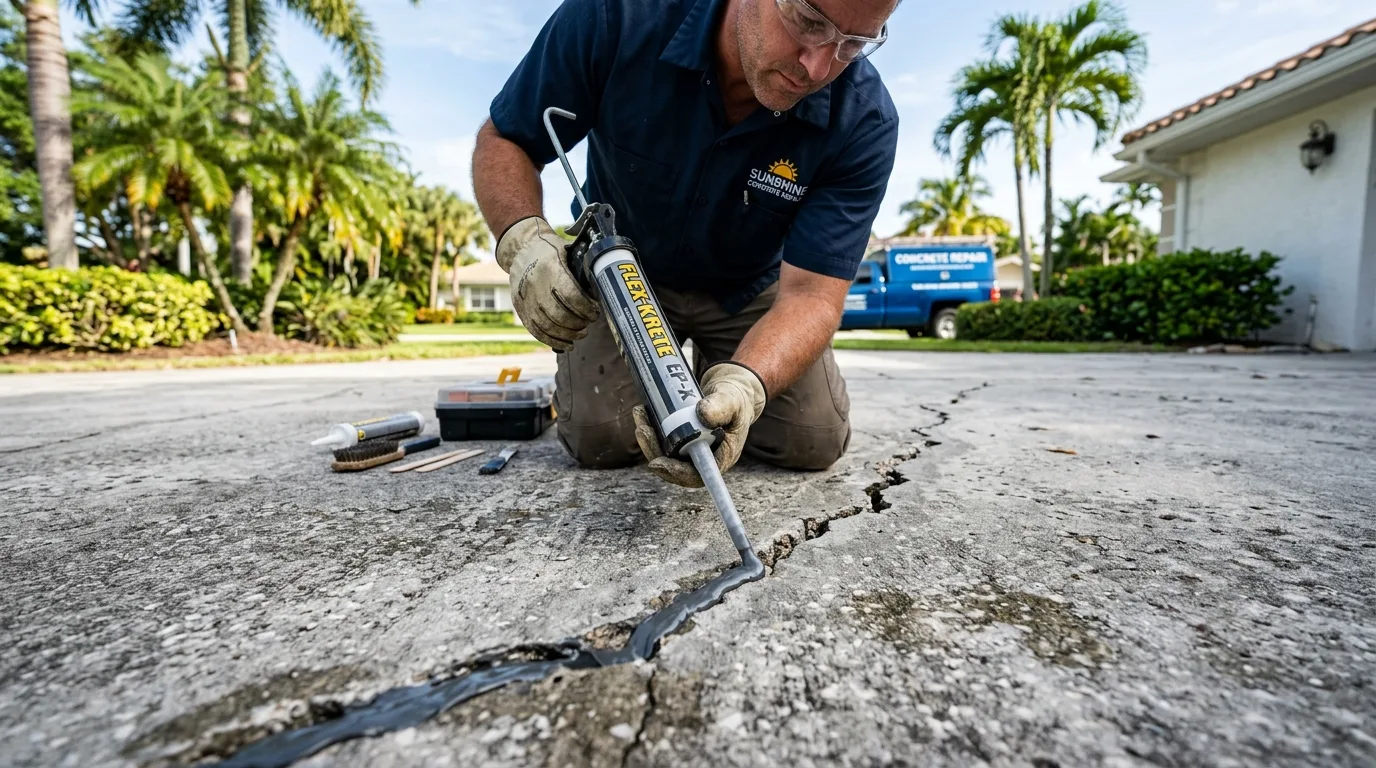
Surface cracking (hairline to 1/4 inch): These are the most repairable category. Hairline cracks are typically cosmetic — caused by normal concrete shrinkage during initial curing. Cracks up to 1/4 inch that haven’t changed in 6+ months are typically structurally benign. Polyurethane or epoxy crack fill seals these against water entry and prevents widening. Cost: $150–$400 for a typical driveway section. Expected life of repair: 5–10+ years if drainage is adequate.
Structural cracking (wider than 1/4 inch, or with vertical displacement): When one side of a crack is higher than the other, the slab has moved differentially — one section has settled or heaved relative to its neighbor. This type of crack can be filled at the surface, but without addressing the sub-base void or drainage issue causing the movement, the repair will re-open. If the underlying cause is addressed, slab lifting (mudjacking) or partial replacement of the settled section creates a lasting repair. Cost: $500–$2,000 depending on extent.
Surface spalling and scaling: When the top layer of concrete breaks away in chips or flakes, exposing the aggregate beneath, the concrete surface has deteriorated. This is repairable through resurfacing — a polymer-modified overlay bonds to the existing slab and creates a new surface layer. Resurfacing works well when the slab is structurally sound. If the slab has poor drainage or is actively settling, resurfacing will delaminate. Cost: $3–$6 per square foot for overlay work.
Full-depth cracking with widespread settlement: When multiple sections of a slab have settled independently, creating uneven surfaces throughout, repair becomes a patchwork solution that doesn’t address the systemic problem. At this point, replacement with proper base preparation is almost always the better investment. Cost: $3.33–$6.66 per square foot for replacement — consistent with the Myrtle Beach-Conway market for new installation.
Practical Uses: Specific Conway Repair Scenarios
Driveway with edge cracking only: Driveways in Red Hill and newer subdivisions often crack at the edges first, where the concrete is thinnest and the sub-base transitions. Edge crack filling at $200–$400 is a sound repair here, buying 5–8 additional years on a driveway that’s otherwise sound. If the cracks are only at the perimeter and the main field is intact, repair makes clear economic sense.
Patio with drainage pooling and surface cracks: When a patio in Carolina Forest is both cracking and accumulating water, the drainage slope has failed. Surface crack repair alone will recur. The repair should address drainage first — regrading the surrounding area or adding a channel drain — then patch the cracks. If the slab has settled significantly toward the home, replacement with corrected drainage slope is the better long-term choice.
Garage floor with map cracking pattern: Map cracking (a network of cracks across the entire surface) often indicates the concrete dried too quickly during curing. If the slab is still structurally sound (no sections that flex or shift), resurfacing with a bonded overlay restores the appearance at $3–$6/sq ft versus replacement at $5–$8/sq ft for a garage floor with proper finish.
Foundation perimeter slab with structural crack: A slab adjacent to the foundation that has cracked and heaved needs to be assessed for whether it’s affecting drainage toward the foundation. If water is pooling toward the home, replacement with corrected slope is the right call regardless of the crack width. The foundation drainage benefit justifies the replacement cost.
Pool deck with delaminating surface: Pool decks that were resurfaced previously and are now showing the overlay delaminating from the base slab are typically replacement candidates. Repeated overlay applications eventually lose bonding effectiveness. A new pour on a properly prepared base — with anti-slip finish and drainage design for Horry County’s rainfall — is a better investment than another overlay that will fail again.
Get a Conway Concrete Assessment Today
We'll evaluate your specific situation and give you an honest repair vs replacement recommendation.
How to Make the Decision: A Simple Framework
Ask these questions in sequence:
-
What’s the root cause? If drainage or sub-base problems are present and haven’t been addressed, repair is likely to recur regardless of surface quality.
-
How widespread is the damage? Isolated cracks and areas are repairable. Widespread cracking, settlement across multiple sections, or damage covering more than 30–40% of the surface area typically means replacement is more economical over a 10-year horizon.
-
How old is the concrete? Concrete under 15 years old with isolated damage is worth repairing. Concrete over 25 years old with widespread surface deterioration is usually approaching end-of-life regardless of repair type.
-
What does the repair include? A repair that addresses only the surface without fixing drainage or sub-base issues isn’t a complete repair — it’s a temporary patch. Get written proposals that specify what root causes are being addressed.
Frequently Asked Questions
How long does concrete repair last in Conway’s climate?
Done correctly — meaning the root cause is addressed along with the surface damage — crack repairs last 5–15 years and resurfacing overlays last 8–12 years in South Carolina’s climate. Repairs that address only the surface without fixing drainage typically fail within 2–4 years in Horry County’s wet-dry seasonal cycle. The quality and completeness of the repair, not just the material used, determines longevity.
Is concrete repair worth it before selling a home in Conway?
Cracked or deteriorated concrete creates a negative first impression and can flag concerns during buyer inspections. For a driveway or patio with surface cracking but structural integrity, repairs costing $500–$1,500 can have a positive impact on buyer perception well above their cost. Full replacement before selling may not pencil out unless the concrete is in severe condition — assess repair vs replacement based on the specific damage.
Can you repair concrete that’s been cracked by tree roots in Conway?
Tree root damage is a special case in Conway, particularly in older neighborhoods with large live oaks. Surface repair above an active root is a temporary solution — the root will continue to grow and re-crack the concrete. Options include: removing the root (consulting an arborist first), installing root barrier before repairing, or replacing the affected section with a design that accommodates root growth. See our concrete repair service page for guidance on root-related repair.
Related: